Neurophysiological and Immunological Effects of Microplastics in Green Mussels (Perna viridis) from N4 Beach and Pulicat Lake, Tamil Nadu, India
Asha P *
PG & Research Department of Zoology, Ethiraj College for Women, Chennai-08, India.
Janani K
PG & Research Department of Zoology, Ethiraj College for Women, Chennai-08, India.
Varsha S
PG & Research Department of Zoology, Ethiraj College for Women, Chennai-08, India.
*Author to whom correspondence should be addressed.
Abstract
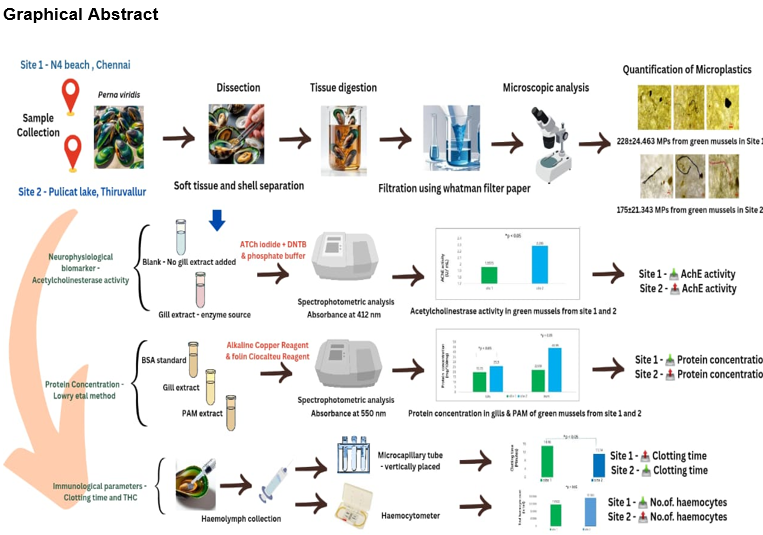
Microplastic pollution has become a widespread environmental concern, particularly in aquatic ecosystems where filter-feeding organisms are highly vulnerable to contamination. This study examines the sublethal physiological effects of environmental microplastic exposure on the neurophysiological, immunological, and biochemical responses of the green mussel Perna viridis, a commercially important and widely consumed marine bivalve. Mussels were collected from two coastal sites in Tamil Nadu, India, N4 Beach, Chennai (Site 1), and Pulicat Lake, Thiruvallur (Site 2) previously reported to differ significantly in microplastic abundance. Acetylcholinesterase (AChE) activity in gill tissues, haemolymph clotting time, total haemocyte count (THC), and total protein levels in the gill and posterior adductor muscle were quantified using standard biochemical and immunological assays. Mussels from Site 1 exhibited significant inhibition of AChE activity, prolonged haemolymph clotting time, reduced THC, and markedly lower protein concentrations compared to those from Site 2 (p < 0.05). These alterations indicate neurotoxicity, immunosuppression, and metabolic stress associated with elevated microplastic exposure. The findings suggest that microplastics, either directly or as carriers of associated contaminants, interfere with critical physiological processes in P. viridis. This study highlights the suitability of green mussels as bioindicators of microplastic pollution and raises concerns regarding ecosystem health and potential human exposure through seafood consumption. Overall, the results provide valuable insights into the sublethal impacts of microplastics on marine bivalves and emphasize the need for sustained monitoring and risk assessment in coastal environments.
Keywords: Aquatic pollution, bioindicator, green mussel, immunological parameters, microplastics, neurophysiological biomarker