Aquatic Plant Communities as Pillars of Ecosystem Health and Biodiversity
Gagan Singh Guru
*

Department of Zoology, Government Digvijay Autonomous, Postgraduate College, Rajnandgaon, Chhattisgarh, India.
Sonal Mishra
Department of Botany, Government Digvijay Autonomous, Postgraduate College, Rajnandgaon, Chhattisgarh, India.
Trilok Kumar
Department of Botany, Government Digvijay Autonomous, Postgraduate College, Rajnandgaon, Chhattisgarh, India.
*Author to whom correspondence should be addressed.
Abstract
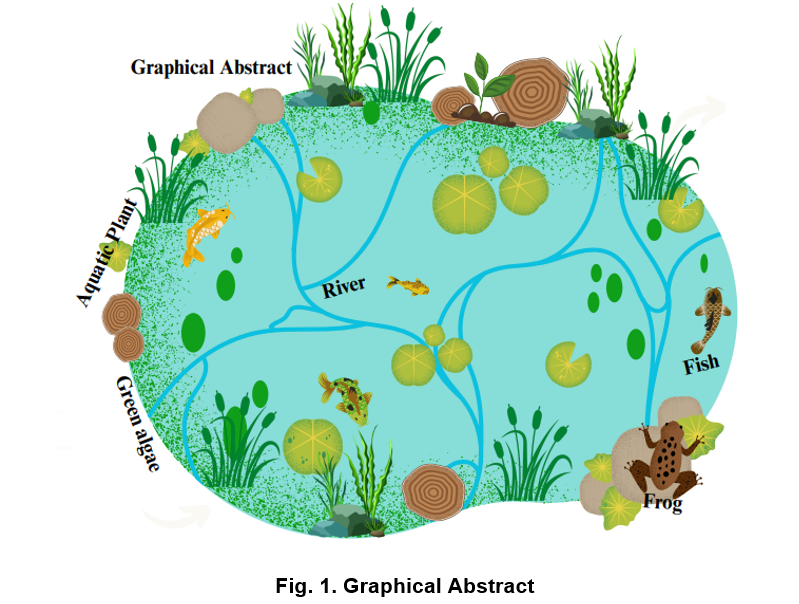
Aquatic plants play a crucial role in maintaining the health and stability of aquatic ecosystems by supporting biodiversity, improving water quality, and providing habitats for various organisms. This study investigates the ecological significance of aquatic plants in aquatic ecosystems, focusing on their diversity, distribution, and role in ecosystem functioning. Field surveys were conducted in multiple aquatic habitats, including rivers, lakes, and wetlands, to assess the species composition and abundance of emergent, floating, and submerged aquatic plants. The findings reveal a rich diversity of species, with varying distribution patterns influenced by factors such as water quality, nutrient levels, and seasonal fluctuations. Aquatic plants contribute to water purification by filtering pollutants and excess nutrients, thus preventing eutrophication and enhancing the overall health of aquatic environments. Additionally, these plants serve as crucial habitats for fish, amphibians, and invertebrates, supporting complex food webs. This study highlights the resilience of aquatic plants, with several species showing unique adaptations to environmental pressures, such as pollution and habitat loss. The research underscores the need for effective conservation strategies to preserve aquatic plant diversity, which is essential for maintaining ecosystem services and ensuring the sustainability of aquatic ecosystems.
Keywords: Aquatic plants, biodiversity, ecosystems, environmental, eutrophication, nutrient, pollution